
What your lawn needs from September through December, and why timing matters.
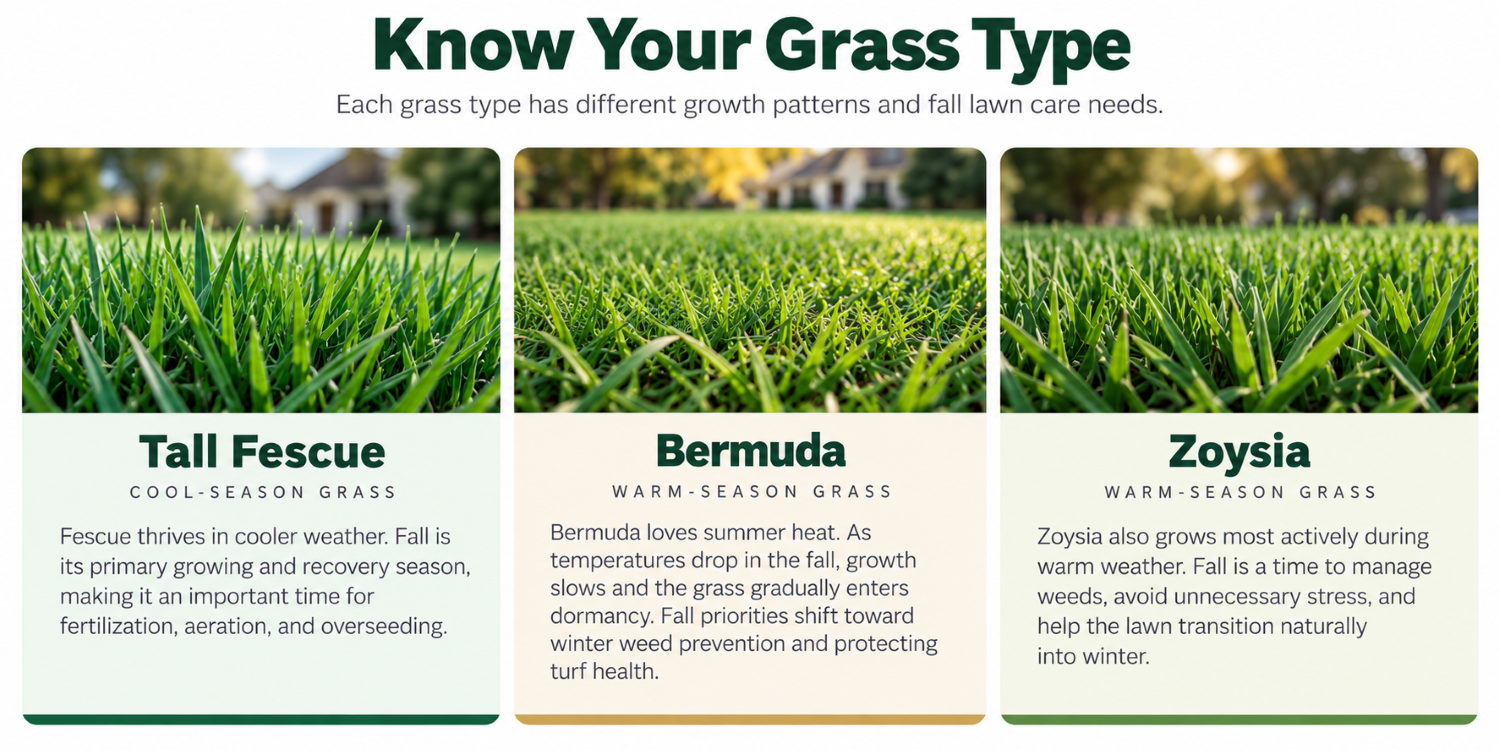
Fall is one of the most important times of year for lawn care in the Carolinas. But here’s something homeowners need to understand: not every type of grass should be treated the same way.
I’m Will Hall, owner of Hippo Turf Care, and one of the things we pay close attention to is how different grass types respond to seasonal changes.
A fescue lawn in Fort Mill might be actively growing and ready for aeration and overseeding, while a Bermuda or zoysia lawn right down the street is beginning to slow down and prepare for winter dormancy.
Both lawns need attention. They just need different things.
Whether you have fescue, Bermuda, or zoysia, this fall lawn care guide will help you understand what should be happening in your yard from September through December, and what you can do now to set your lawn up for a healthier spring.
First, Know Your Grass Type
September: Start Preparing for the Seasonal Change
September is when our fall lawn care programs really begin to take different directions depending on the grass type.
For Fescue Lawns
As temperatures begin to cool, fescue starts recovering from the stress of summer. This is one of the best times to address thinning grass, bare spots, and compacted soil.
Our priorities include:
-
Core aeration to relieve soil compaction and improve air and water movement.
-
Overseeding to help establish new grass and improve lawn density.
-
Fall fertilization to support active growth and root development.
-
Monitoring soil moisture to help new seed germinate.
Fescue doesn’t spread through aboveground runners the way Bermuda and zoysia do. That means overseeding is often necessary to maintain a thick, healthy lawn.
For Bermuda and Zoysia Lawns
While fescue is gearing up, warm-season lawns are beginning to slow down.
This is an important time to evaluate summer damage, address weed pressure, and prepare for dormancy.
We focus on winter weed prevention, checking for nutrient deficiencies, and avoiding late-season practices that encourage tender new growth.
Will’s Tip: Fall aeration and overseeding are great for fescue, but Bermuda and zoysia generally benefit from core aeration during their active growing season in late spring or summer.
October: Don’t Miss These Important Lawn Care Windows
October is a big month for turf care in our area. And depending on when you’re reading this, there may be a few things you don’t want to put off.
Fescue: The Aeration and Overseeding Window Is Closing
Early October can still offer good conditions for establishing fescue, but we’re getting toward the end of the ideal fall aeration and overseeding window.
New grass needs time to germinate, establish roots, and mature before colder weather arrives.
If your fescue lawn is thin, patchy, or struggling after summer, this is the time to have it evaluated.
Once that window closes, our attention turns toward maintaining healthy growth and helping newly established grass develop.
One important detail: traditional pre-emergent weed control can interfere with grass seed germination. That’s why we plan weed prevention around the seeding schedule rather than applying the same treatment to every lawn.
Bermuda and Zoysia: Winter Weed Prevention Takes Priority
This is where pre-emergent weed control becomes especially important.
As Bermuda and zoysia slow down, winter annual weeds can begin establishing themselves in the lawn.
Common winter weeds in the Carolinas include:
-
Annual bluegrass, often called Poa annua
-
Henbit
-
Chickweed
-
Other cool-season broadleaf weeds
Pre-emergent treatments work by preventing susceptible weed seedlings from successfully establishing. They need to be applied at the appropriate time, before the targeted weeds emerge.
And here’s the part a lot of homeowners miss: waiting until you see weeds growing in your yard may mean you’ve already missed the best opportunity for pre-emergent prevention.
By October, some winter weeds may already be germinating, depending on soil temperatures and weather conditions. We evaluate whether a pre-emergent, a targeted post-emergent treatment, or a combination is appropriate.
Will’s Tip: A fall weed control program isn’t just about how your lawn looks in October. It’s about reducing the weeds you’ll be dealing with through winter and into early spring.
November: Support Fescue Growth and Protect Dormant Turf
By November, we’re seeing a bigger difference between cool-season and warm-season lawns.
Fescue Lawns
Fescue can continue growing during mild fall weather, even as temperatures drop.
This is an important period for maintaining healthy roots and supporting the grass that was established earlier in the season.
November priorities include monitoring lawn moisture, managing fallen leaves, watching for signs of turf disease, and applying appropriate fall fertilizer based on the lawn’s needs.
One mistake homeowners make is allowing thick layers of leaves to sit on the grass for weeks. That can block sunlight, trap moisture, and create conditions that favor disease.
Bermuda and Zoysia Lawns
By this point, Bermuda and zoysia lawns may be turning tan or brown as they enter dormancy.
That’s normal.
Dormancy is a natural response to cooler temperatures, not necessarily a sign that your lawn is dying.
Our focus shifts toward monitoring winter weeds, avoiding unnecessary nitrogen fertilization, and checking for conditions that could affect the lawn’s health.
If you’ve noticed a particular area of your Bermuda or zoysia lawn struggling throughout the year, fall is also a good time to identify possible soil or drainage problems so they can be addressed at the appropriate time.
December: Your Lawn Still Needs Attention
Just because grass growth has slowed doesn’t mean lawn care stops.
For fescue, winter can still bring periods of active growth during mild weather. For Bermuda and zoysia, the grass may be fully dormant, but weeds can remain active.
A few things matter for all three grass types:
-
Keep heavy leaf buildup off the lawn.
-
Avoid unnecessary foot traffic when the ground is saturated or frozen.
-
Monitor winter weed activity.
-
Water during extended dry periods when needed, accounting for rainfall and dormancy.
-
Watch for drainage problems and areas where water consistently collects.
Winter is also a good time to evaluate what worked during the past growing season and what needs improvement before spring.
A Quick Fall Lawn Care Guide for the Carolinas
Here’s a simple way to understand what each grass type needs throughout the season.
| Month | Fescue | Bermuda & Zoysia |
|---|---|---|
| September | Aeration, overseeding, fertilization | Winter weed prevention, dormancy preparation |
| October | Final seeding window, root development, fertilization | Pre-emergent and targeted weed control |
| November | Fertilization as needed, leaf removal, disease monitoring | Weed monitoring, dormancy protection |
| December | Winter maintenance, moisture monitoring | Dormant turf protection, winter weed control |
These are general guidelines. The exact timing depends on temperatures, rainfall, soil conditions, and the health of your lawn.
Why a Year-Round Turf Care Program Makes a Difference
One of the biggest things I want homeowners to understand is that a healthy lawn doesn’t happen from one treatment.
What we do in the fall affects how your lawn performs in the winter. What happens over the winter affects how your lawn responds when temperatures warm back up.
That’s why we take a year-round approach at Hippo Turf Care.
We look at the grass type, soil conditions, seasonal weed pressure, and the specific challenges affecting your yard. Then we build a turf care program around what your lawn actually needs.
That may include lawn fertilization, pre-emergent and post-emergent weed control, lawn insect treatments, soil amendments, and seasonal aeration and overseeding.
The goal isn’t simply to make your lawn look good for a few weeks. It’s to improve turf health over time.
Let’s Get Your Lawn Ready for the Season Ahead
If your fescue lawn needs attention before the fall seeding window closes, or you’re concerned about winter weeds taking over your Bermuda or zoysia lawn, Hippo Turf Care can help.
We’re based in Rock Hill, South Carolina, and provide professional turf care services throughout Fort Mill, Tega Cay, Lake Wylie, York, Clover, Belmont, Kings Mountain, and surrounding Charlotte-area communities.
Your lawn doesn’t need a one-size-fits-all treatment. It needs the right care at the right time.