Fescue Lawns Are Struggling Right Now – But the Comeback Is Coming
If your fescue lawn is looking a little rough right now, I’m not going to try to convince you otherwise.
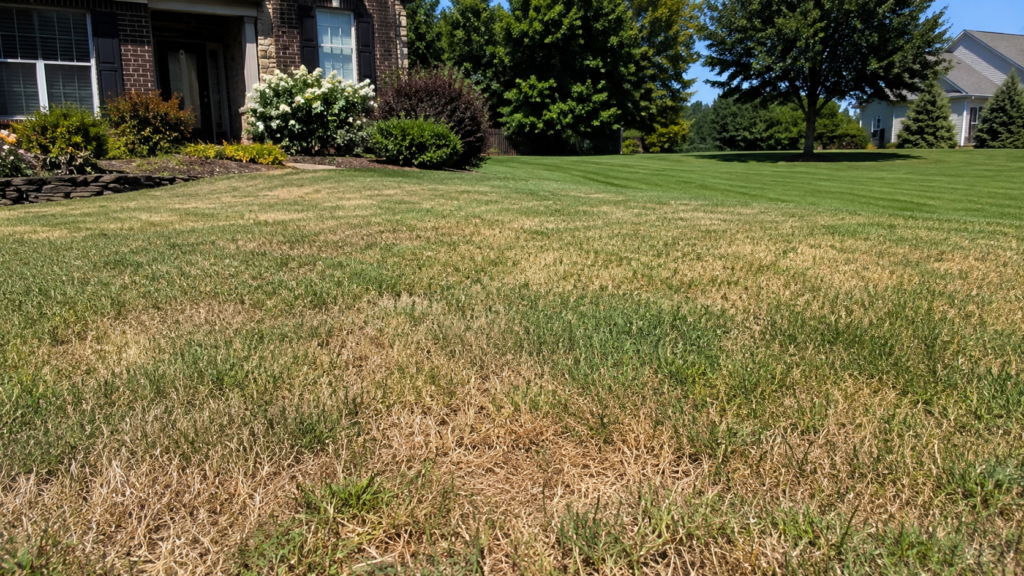
Some fescue lawns around York County and the surrounding area are still hanging in there pretty well. Others are struggling. That’s just the reality of growing a cool-season grass through a Carolina summer.
Meanwhile, Bermuda and Zoysia lawns are right in their wheelhouse. It’s hot, they’re actively growing, and a lot of them look fantastic right now.
That’s where we are in the season.
And for our fescue customers, there’s some good news: fall aeration and overseeding is getting close.
A Quick August Lawn Update From Hippo Turf Care
As I said in the video:
“Bermuda, Zoysia lawns—peak of the season. It’s nice and hot. Those lawns are looking really, really nice.”
That’s exactly what we expect from warm-season grasses this time of year.
Bermuda and Zoysia love heat. August is when they’re actively growing and, when they’re properly maintained, can be thick, green and aggressive.
The big thing right now is to keep doing the basics correctly.
Keep mowing correctly. Keep watering correctly.
Don’t scalp the lawn trying to stretch the time between mowings, and don’t suddenly start pouring water on it every day because it’s hot. Deep, appropriate watering and consistent mowing go a long way toward keeping warm-season turf healthy through the rest of summer.
Fescue is a completely different story.
Why Fescue Struggles So Much in the Carolina Summer
Fescue is a cool-season grass.
That means the weather we enjoy in October is a whole lot closer to what fescue enjoys than the weather we get in July and August.
Once we get into prolonged summer heat, fescue is under stress. Add periods of drought, warm nights and other environmental pressures, and maintaining a perfect fescue lawn through late summer can be a challenge.
That’s why I said this in the video:
“There’s some good ones and there’s some struggling ones, I’ll be honest.”
I think that’s important for homeowners to hear.
If you’ve lost some density or have thin areas in your fescue lawn this summer, it doesn’t automatically mean somebody did something wrong. Sometimes you’re looking at the effects of trying to grow a cool-season grass through the hottest, most stressful part of the year in the Carolinas.
Our job is to help the lawn get through it – and then take advantage of the season when fescue has the best opportunity to recover.
Fall Is the Fescue Comeback Season
Here’s the part I’m excited about.
We’re getting close to fescue aeration and overseeding season.
As I said in the video:
“Fescue lawns, we will be making a comeback!”
And that’s really how I look at fall aeration and overseeding. It’s our opportunity to repair what summer took out of the lawn and set that fescue up for the months ahead.
Fall gives us cooler temperatures and better growing conditions for new fescue seed. Instead of asking young grass to establish itself in brutal summer heat, we’re working with the natural growing cycle of the plant.
Timing matters.
What Aeration Does for a Fescue Lawn
Core aeration isn’t just something we do because it’s on the fall lawn-care calendar.
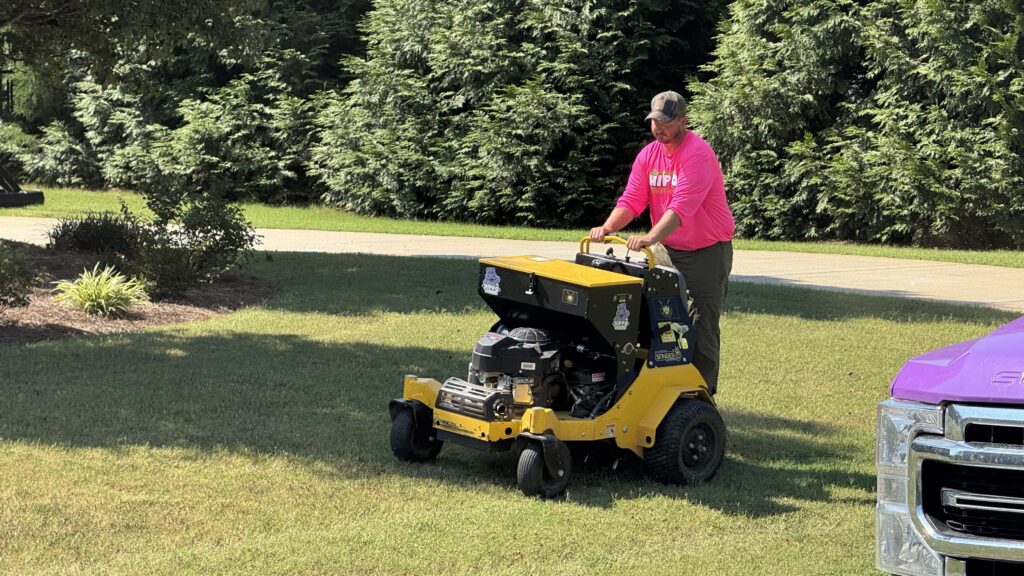
An aerator physically removes small plugs, or cores, of soil from the lawn. Those openings can help relieve soil compaction and allow air, water and nutrients to move more effectively into the root zone.
It also creates a much better environment for overseeding.
When we’re putting new fescue seed into an existing lawn, we want good seed-to-soil contact. Aeration creates openings throughout the turf where that seed has a better opportunity to establish.
For a lawn that has spent months dealing with summer stress, that’s valuable.
Why We Overseed Fescue Instead of Just Waiting for It to Fill Back In
This is one of the biggest differences between fescue and grasses like Bermuda.
Bermuda can spread aggressively through stolons and rhizomes. If conditions are right, it can move into thin or damaged areas.
Fescue grows differently.
If a fescue plant dies and leaves a bare area behind, you can’t count on the surrounding turf to aggressively spread over and repair that spot.
That’s where overseeding comes in.
We introduce new seed to rebuild density and fill areas that thinned out or were lost during the summer.
That’s also why a fescue lawn that looks disappointing in August can look completely different later in the fall. August isn’t necessarily the finished product.
Don’t Give Up on Your Fescue Lawn in August
This is probably the biggest thing I want fescue homeowners to take away from this update.
Don’t judge your lawn’s entire year by what it looks like during its hardest part of the year.
If you’re seeing thinning, brown areas or a lawn that simply doesn’t have the density it had in spring, we’re seeing some of that too.
We still want to pay attention to problems that may require action. Not every brown spot should automatically be blamed on summer. Disease, insects, watering issues and other turf problems can all cause damage.
But some summer stress in fescue is normal.
We’re not trying to force a cool-season grass to behave like Bermuda in August.
We’re trying to manage it intelligently until its growing conditions improve.
What Should You Do Between Now and Aeration?
If you have a fescue lawn, this isn’t the time to start throwing random products at it because you’re frustrated with how it looks.
Focus on good lawn-care fundamentals.
Continue mowing appropriately. Pay attention to rainfall and your lawn’s actual watering needs. Avoid unnecessary stress on already-weakened turf. And start thinking ahead to fall rather than trying to manufacture a dramatic August turnaround.
Most importantly, don’t wait until aeration and overseeding season is already underway to start planning for it.
Fall comes quickly.
One minute we’re talking about surviving summer, and the next we’re talking about football, cooler mornings and seed going into the ground.
Aeration and Overseeding Is a Process, Not an Instant Fix
One thing we always want homeowners to understand is that overseeding is the beginning of the process—not the end.
Once seed goes down, what happens afterward matters.
New seed needs the right moisture conditions for germination. As that new grass emerges, watering practices need to adjust. Mowing needs to be handled appropriately. The lawn then needs continued nutrition and weed management as it matures.
There’s a partnership between what we do as your turf-care company and what you do as the homeowner.
We can aerate properly, put down quality seed and build a program around the lawn, but successful establishment also depends on the care that happens between our visits.
That’s why communication is such a big part of what we do at Hippo Turf Care. We want our customers to understand what we’re doing, why we’re doing it and what they need to do afterward.
Warm-Season Lawn? Enjoy It – You’re in Prime Time
And I don’t want our Bermuda and Zoysia customers feeling left out.
Right now, this is your season.
If your warm-season lawn is thick and green, enjoy it. Keep mowing it correctly, give it the water it actually needs and let it do what warm-season turf does best in the heat.
The same August weather that’s beating up fescue is exactly what Bermuda and Zoysia have been waiting for.
That’s the funny thing about turf care in the Carolinas: there isn’t one lawn-care calendar that applies equally to every yard.
Knowing your grass type—and treating it according to its actual growing cycle—is a huge part of getting better results.
Ready for the Fescue Comeback?
We’re getting close.
Fall aeration and overseeding is one of my favorite times of the year because we get to watch these tired summer fescue lawns start turning the corner.
Cooler weather. Football season. MLB playoffs. Aerators running. Seed going down.
We’re ready to rock ‘n roll.
If your fescue lawn has taken a beating this summer, now is the time to start planning for fall aeration and overseeding with Hippo Turf Care.
Give us a call and let’s get your lawn ready for its fall comeback.
— Will Hall
Owner, Hippo Turf Care
📞 Call or Text: 803-810-1145
👉 Contact Us