Pre-emergent weed control
Seasonal applications help prevent certain weeds from establishing. They need to be in place before the target weeds emerge and won't remove weeds already growing.

Tired of fighting weeds in your lawn? We offer professional weed control for Rock Hill, Fort Mill, Lake Wylie, and surrounding communities. Get ahead of weeds with seasonal prevention, targeted treatments, and ongoing turf care.

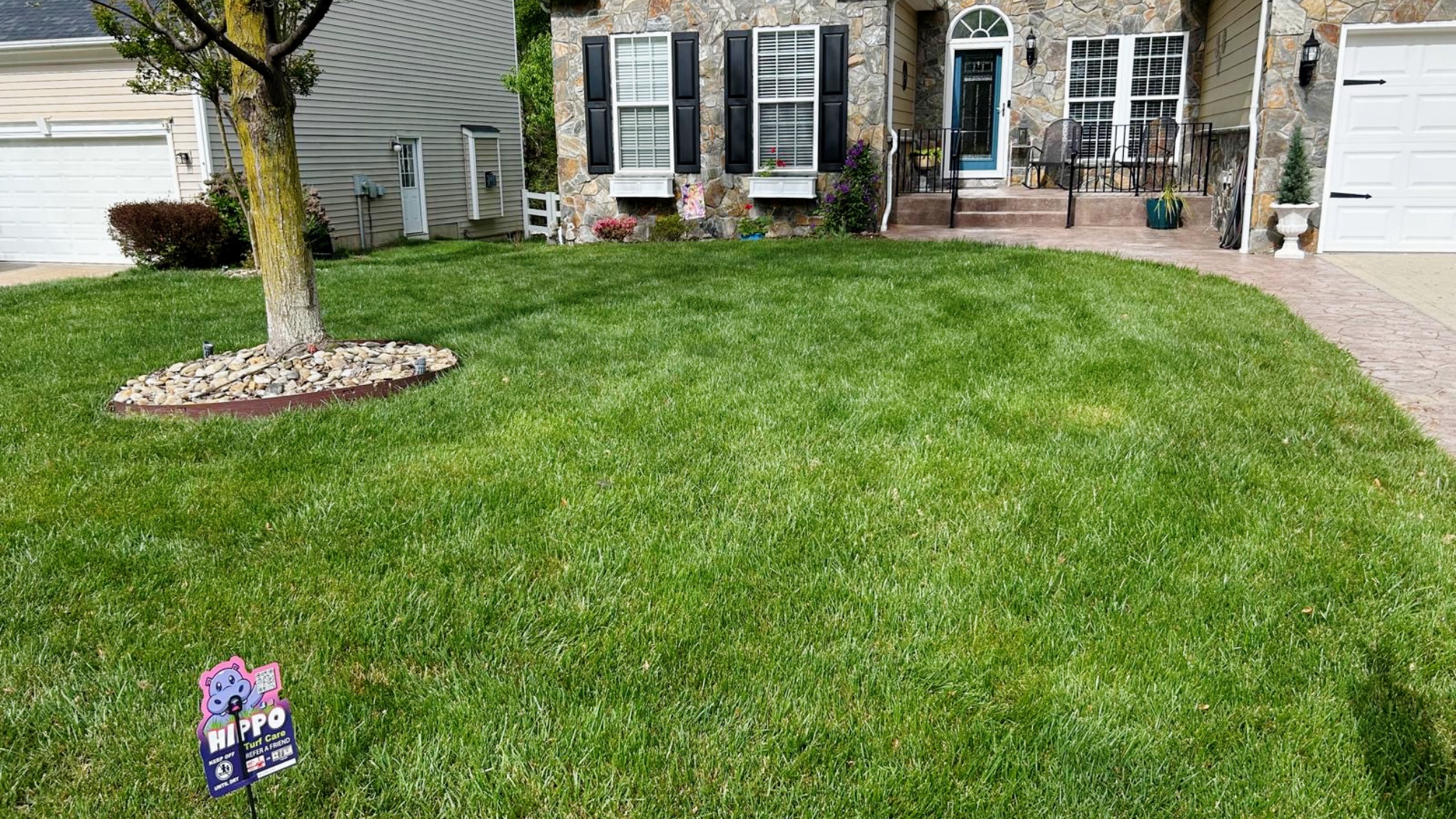
When weeds start taking over, it's tempting to spray something and hope for the best. But the right treatment depends on what's growing, what grass you have, and when we're treating it.
We approach weed control as part of the whole lawn. Treating existing weeds matters. So does preventing the next round and helping your grass fill the space they leave behind.
Explore the Hippo Turf Care program →We combine pre-emergent and post-emergent weed control with ongoing turf care. Each has a different job, and timing matters for all three.
Seasonal applications help prevent certain weeds from establishing. They need to be in place before the target weeds emerge and won't remove weeds already growing.
Existing weeds need treatment selected for the weed and your lawn's grass type. Some respond sooner than others; persistent weeds may need follow-up applications.
Thin turf leaves room for weeds. Our turf care professionals visit regularly to treat your lawn and monitor its progress. Between visits, we offer mowing and watering tips to help you support healthier grass and keep weeds from gaining ground.
Planning to seed your lawn? Tell us before treatment. Some weed control products can interfere with new grass establishment. We need to coordinate treatment and seeding around the product's label requirements.
Crabgrass, clover, and nutsedge can all interrupt a good-looking lawn, but they aren't the same problem. Identification helps us choose a suitable treatment and set realistic expectations.
Clover, dandelions, chickweed, and henbit are examples. Treatment depends on the weed's growth stage, your turf, and seasonal conditions.
Crabgrass and goosegrass can blend into the lawn at first. Prevention is especially useful; options for established weeds depend on the species and grass being protected.
Those fast-growing, upright shoots may look like grass, but nutsedge is a sedge. It calls for a different approach, and persistent patches can require repeated attention.
Your grass type, visible weeds, and lawn condition help guide the plan. Bermuda, zoysia, and fescue don't all tolerate the same treatments.
Response varies by weed, product, and weather. New weeds may emerge while existing ones decline, which is why ongoing care matters.
Watering, mowing, and lawn access instructions depend on what was applied. Follow the guidance for your visit and ask us if anything is unclear.
Our 8-round and 12-round lawn care programs include weed control, fertilization, and lawn pest protection. Compare the options and get pricing for your property.
Owner Will Hall and the Hippo Turf Care team are based in Rock Hill, South Carolina. We help homeowners in Fort Mill, Tega Cay, Lake Wylie, Clover, York, and Sun City Carolina Lakes, along with surrounding communities.
Our service area also includes parts of the Charlotte area, including Pineville, Steele Creek, Belmont, Kings Mountain, and The Palisades. Request a quote for your address to confirm availability.
Whether you've tried treating the lawn yourself or you're taking over a yard that needs work, tell us what you're seeing. We'll help you figure out where to start.
Meet Hippo Turf Care →A spray may treat visible weeds without preventing new ones. Seeds already in the soil, persistent roots or underground structures, and thin turf can all contribute to recurring weeds. The right plan depends on identifying the weed and addressing conditions that help it grow.
Selective herbicides can control certain weeds in compatible turf when used according to their labels. Product choice matters: a treatment suitable for Bermuda may not suit fescue or zoysia. Some difficult weeds have limited selective treatment options, so identifying both the weed and the lawn grass comes first.
Some weeds begin showing changes within days, while others take weeks or follow-up treatment. Weed maturity, weather, and the product applied affect the response. A heavily infested lawn generally improves over a series of visits rather than one application.
We pride ourselves on clear communication. We’ll let you know when we’re coming, what treatment we applied, and when children and pets can return to the lawn. You’ll also receive any watering, mowing, or other aftercare instructions.
Yes, but the timing needs to be coordinated. Some pre-emergent and post-emergent products can affect germination or young grass. Tell us about recent or planned seeding so treatment can follow the appropriate label intervals.
Fertilizer alone doesn't kill weeds. It supplies nutrients to grass. Weed control handles the weeds, while appropriate fertilization and lawn maintenance support healthier turf. Both are included in our lawn care programs.
Pricing depends on your lawn size and the program you choose. Use our instant quote tool for your property, or compare our 8-round and 12-round lawn care programs to see the available options.
For additional homeowner guidance, see Clemson Extension's resources on warm-season lawn weeds and weed management in fescue.
Start with a quote for your property. We'll help you take the next step toward a healthier lawn.